
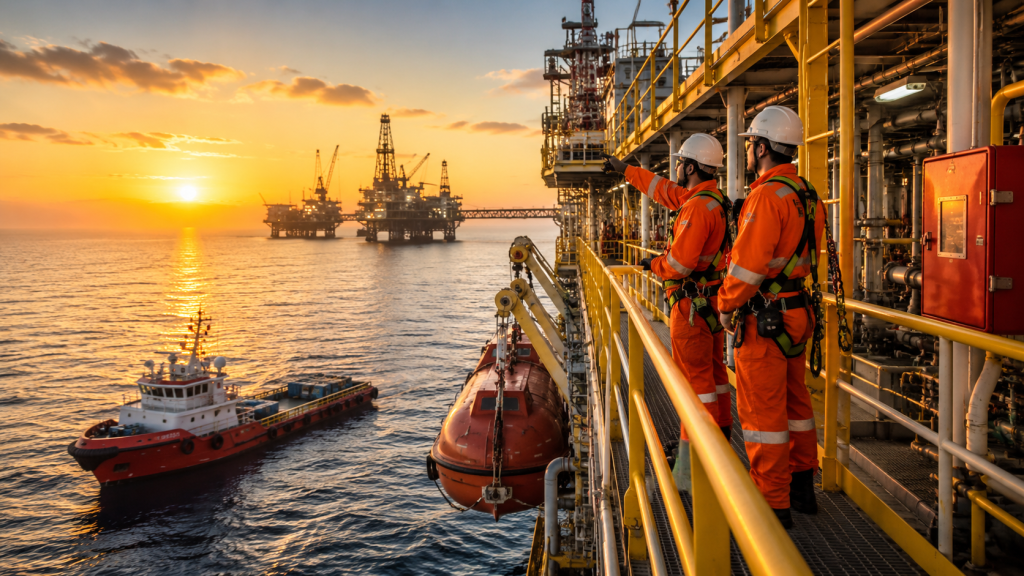
The offshore engineering in uae has become one of the region’s leading centers for offshore energy, marine infrastructure, and industrial development. Large-scale offshore platforms, subsea pipelines, ports, and marine facilities play a major role in supporting the country’s oil and gas sector as well as broader infrastructure expansion.
These projects operate in technically demanding environments where structural reliability, operational continuity, and worker safety are critical at every stage.
What Is Offshore Engineering and Why Is Safety Critical?
Understanding the importance of safety in offshore engineering in UAE begins with defining what offshore engineering includes and why these projects involve unique technical and operational risks.
What Is Offshore Engineering?
Offshore engineering refers to the design, construction, operation, and maintenance of structures and infrastructure located in marine environments through specialized infrastructure design services that address both marine and operational challenges.
Examples include:
- Offshore oil and gas platforms
- Subsea pipelines
- Marine terminals and ports
- Offshore renewable energy systems
- Coastal protection structures
These projects often involve highly specialized areas of marine engineering UAE and industrial infrastructure development.
Environmental Challenges in Offshore Projects
Unlike conventional land-based construction, offshore projects operate under constantly changing environmental conditions.
Engineering teams must address:
- Strong sea currents
- Corrosion from saltwater exposure
- Wave and wind loading
- High humidity conditions
- Remote offshore locations
These environmental factors significantly increase technical complexity.
Risk Exposure in Offshore Environments
Offshore projects involve elevated levels of risk that can affect:
- Worker safety
- Structural stability
- Environmental protection
- Operational continuity
- Financial performance
In major oil and gas engineering UAE developments, even small safety failures can result in severe operational disruption, environmental damage, or financial losses.
This is why strict offshore safety standards UAE frameworks are essential throughout the project lifecycle.
What Safety Standards Govern Offshore Engineering Projects in UAE?
The success of offshore engineering in UAE projects depends heavily on strict adherence to both local and international safety regulations designed to protect workers, infrastructure, and marine environments.
UAE Local Regulations
Offshore developments in the UAE must comply with national engineering, environmental, and industrial safety regulations.
These frameworks typically address:
- Structural integrity requirements
- Worker safety procedures
- Environmental protection measures
- Marine operational standards
- Emergency response planning
Compliance with local regulations forms the foundation of offshore compliance UAE requirements.
International Safety Standards
Many offshore projects also follow internationally recognized standards to ensure global engineering consistency and operational safety.
Commonly applied standards include:
- ISO standards for quality and safety management
- API (American Petroleum Institute) standards for oil and gas systems
- OSHA safety guidelines related to occupational safety practices
These standards help establish consistent technical and operational benchmarks across offshore developments.
HSE Frameworks
Health, Safety, and Environment (HSE) management systems are central to offshore operations.
HSE frameworks focus on:
- Hazard identification
- Risk mitigation
- Emergency preparedness
- Incident prevention
- Environmental protection
Importance of Compliance
Compliance is critical because offshore failures can have severe consequences involving human safety, operational shutdowns, and environmental damage.
Role of Standardization in Safety
Standardized engineering procedures improve consistency across:
- Design processes
- Construction methods
- Inspection protocols
- Operational maintenance systems
This reduces uncertainty and improves project reliability.
Which Authorities Regulate Offshore Engineering Safety in UAE?
Managing safety in offshore engineering in UAE involves coordination between multiple authorities responsible for energy infrastructure, marine systems, and industrial safety regulation.
Abu Dhabi National Oil Company (ADNOC)
ADNOC plays a major role in regulating safety and operational standards across offshore oil and gas developments in Abu Dhabi.
Its responsibilities include:
- Safety compliance monitoring
- Engineering review requirements
- Operational risk management standards
- Contractor safety evaluation
Ministry of Energy and Infrastructure UAE
The ministry oversees broader infrastructure and energy-related regulatory frameworks connected to national development strategies and industrial safety requirements.
Dubai Municipality
For marine infrastructure and coastal developments within Dubai, municipal authorities may oversee certain construction safety, environmental, and infrastructure compliance requirements.
Differences Between Oil & Gas and Marine Projects
Although both sectors involve offshore infrastructure, safety priorities may differ:
- Oil and gas projects focus heavily on explosion prevention, pressure systems, and hazardous material management.
- Marine infrastructure engineering projects often prioritize structural durability, marine navigation safety, and environmental impact control.
Those differences don’t just sit on paper — they shape how designs get put together and how operations get run on the ground.
What Are the Major Risks in Offshore Engineering Projects?
Offshore engineering in uae doesn’t come with easy conditions — the technical complexity baked into these projects creates high-risk situations that demand careful planning, constant monitoring, and serious safety management from start to finish.
Structural Failure
Offshore structures don’t get a break from the environment — they’re constantly up against dynamic forces that can chip away at long-term stability over time.
Potential causes include:
- Corrosion
- Fatigue stress
- Foundation instability
- Extreme weather conditions
Harsh Environmental Conditions
Marine environments place significant pressure on equipment, materials, and operational systems due to:
- Saltwater exposure
- Temperature fluctuations
- High humidity
- Storm conditions
Fire and Explosion Hazards
In offshore energy facilities, combustible materials and pressurized systems create elevated fire and explosion risks.
This makes emergency response planning and system redundancy critical components of offshore construction safety UAE.
Equipment Failure
Offshore operations depend heavily on mechanical systems, lifting equipment, pipelines, and monitoring technologies.
Equipment failure can lead to:
- Operational shutdowns
- Safety incidents
- Environmental contamination
Worker Safety Risks
Offshore personnel often work in isolated and hazardous environments involving:
- Heavy lifting operations
- Elevated structures
- Confined spaces
- Harsh weather conditions
Environmental Pollution
Leaks, spills, or structural failures can cause significant environmental damage to marine ecosystems and coastal infrastructure.
These risks explain why offshore safety management requires continuous monitoring and strict engineering oversight.
How Do Engineering Consultants Ensure Offshore Safety Compliance?
Engineering consultants play a critical role in maintaining safety throughout offshore engineering in UAE projects by integrating technical compliance, risk management, and operational planning into every stage of development.
Risk Assessments
Consultants perform detailed risk evaluations to identify potential structural, operational, and environmental hazards before construction begins.
Design Validation
Engineering teams verify that offshore structures meet required performance and safety standards under expected environmental conditions.
Compliance Checks
Consultants review project documentation, engineering calculations, and operational procedures to ensure alignment with applicable standards and regulations.
Safety Planning
Safety planning includes:
- Emergency response procedures
- Worker safety protocols
- Hazard mitigation strategies
- Inspection schedules
Ongoing Monitoring
Safety management continues throughout operations using inspection programs, maintenance systems, and performance analysis.
This continuous oversight helps reduce long-term operational risks.
How Does Technology Improve Offshore Engineering Safety?
Advanced technologies are transforming safety management across offshore engineering in UAE projects by improving monitoring, predictive analysis, and operational efficiency.
AI for Risk Prediction
Artificial intelligence systems analyze operational data to identify patterns associated with equipment failure or safety incidents before problems occur.
Sensors and Monitoring Systems
Real-time sensors continuously monitor:
- Structural movement
- Pressure systems
- Equipment performance
- Environmental conditions
This allows engineering teams to respond quickly to abnormal conditions.
Remote Inspections
Drones, underwater robotics, and remote monitoring systems reduce the need for personnel to enter hazardous areas during inspection activities.
Digital Twins
Digital twin systems create virtual models of offshore infrastructure that simulate operational performance and predict maintenance requirements.
Automation Systems
Automation improves operational consistency while reducing human exposure to hazardous environments.
Modern technologies are giving offshore operators better tools to tighten up safety performance and keep infrastructure holding up reliably over the long run.
Conclusion
Offshore engineering in UAE doesn’t operate in forgiving conditions — between the marine environment, the complexity of the infrastructure systems involved, and the operational risks that come with the territory, safety isn’t just a priority, it’s the priority that everything else gets built around.
Keeping workers protected, operations running reliably, and environmental impact in check all comes back to the same things — strong safety standards, regulatory compliance, solid engineering practices, and monitoring that doesn’t let up.
As offshore infrastructure keeps expanding across the UAE, engineering teams are going to lean harder on integrated safety frameworks and advanced technologies to make sure operations stay safer, run more efficiently, and hold up against whatever the environment throws at them.