
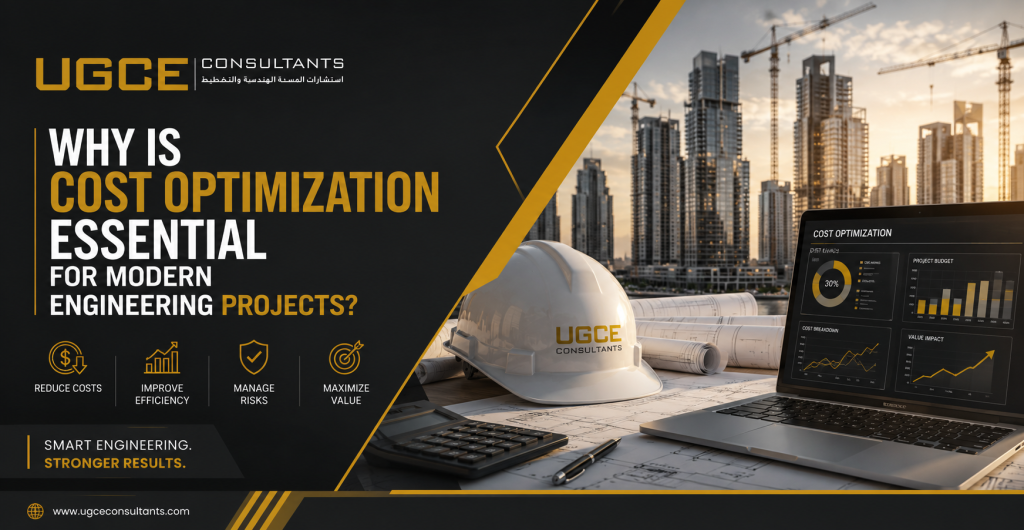
In today’s construction and infrastructure sector, project success is measured by more than technical quality alone.
This is where Cost Optimization in Engineering Projects plays a critical role. Cost optimization isn’t about cutting expenses at every opportunity or automatically going with the lowest-priced option available
The real aim is to keep performance, quality, risk, and budget in check together — not to let any single one of them take over and steer every call that gets made.
What Does Cost Optimization Mean in Engineering Projects?
Understanding Cost Optimization in Engineering Projects begins with recognizing that optimization differs significantly from simple cost cutting.
Cost optimization is about making a project run leaner without letting anything important slip — performance, safety, quality, and the bigger operational goals all stay intact. The idea is to spot where resources are being stretched thin or wasted and fix that before it starts affecting results.
In practice, Engineering cost optimization involve:
- Improving design efficiency
- Reducing unnecessary material usage
- Optimizing construction sequencing
- Improving procurement strategies
- Reducing rework and delays
- Enhancing operational performance
Unlike traditional budget reductions, optimization focuses on value creation rather than simply lowering expenditures.
Why Is Cost Optimization Important for Project Success?
Project owners and developers are paying closer attention to Cost Optimization in Engineering Projects as financial pressures continue to grow and budgets face increasing scrutiny. Without strong cost management strategies, even technically successful projects can experience financial challenges.
Cost optimization helps projects achieve several important objectives:
Improved Financial Performance
Projects that maintain better control over costs are more likely to remain within budget and meet financial expectations.
Better Resource Utilization
Optimization ensures that labor, materials, equipment, and capital investments are allocated efficiently throughout the project lifecycle.
Reduced Risk Exposure
Early cost planning helps identify financial risks before they impact project delivery.
Greater Long-Term Value
Projects designed with lifecycle performance in mind often deliver lower operational and maintenance costs after construction is completed.
This broader perspective is becoming increasingly important in modern Engineering project management practices.
What Are the Biggest Factors That Increase Engineering Project Costs?
Many challenges can undermine Cost Optimization in Engineering Projects if they are not addressed early and proactively.
Scope Changes
One of the most common causes of budget increases is uncontrolled scope growth.
Additional requirements introduced during design or construction can lead to:
- Design revisions
- Additional materials
- Extended schedules
- Increased labor costs
Careful scope management is therefore essential for effective Project cost control.
Material Price Fluctuations
Construction projects are often exposed to changing material costs caused by:
- Inflation
- Supply chain disruptions
- Market demand shifts
- Global economic conditions
These fluctuations can significantly impact overall project budgets.
Design Errors and Rework
Incomplete or poorly coordinated designs frequently result in rework during construction.
Common consequences include:
- Additional labor costs
- Material waste
- Schedule delays
- Contractor claims
Reducing rework is one of the most effective forms of Construction cost reduction.
Delays and Scheduling Issues
Project delays increase costs through:
- Extended equipment rentals
- Additional labor expenses
- Site overhead costs
- Missed revenue opportunities
Strong scheduling practices are therefore essential components of Construction cost management.
Poor Coordination Among Stakeholders
When designers, contractors, consultants, and project owners stop talking to each other the way they should, small coordination gaps don’t stay small for long — they quietly grow into the kind of problems that start eating into schedules and budgets.
Keeping everyone on the same page from start to finish is what stops minor misunderstandings from becoming the most expensive part of the job.
How Can Effective Planning Reduce Project Costs?
A lot of cost-saving opportunities are won or lost long before construction ever starts, which is why detailed planning remains one of the most effective tools for Cost Optimization in Engineering Projects.
Effective planning typically includes:
- Accurate project scope definition
- Detailed scheduling
- Resource planning
- Procurement strategies
- Risk management assessments
- Cost forecasting exercises
When planning is performed thoroughly, project teams can avoid many of the budget issues that commonly arise during construction.
This proactive approach also improves overall Construction budget optimization by reducing uncertainty and supporting more reliable financial forecasting.
What Is Value Engineering and How Does It Optimize Costs?
Among all strategies used to improve Cost Optimization in Engineering Projects, value engineering remains one of the most effective.
What Is Value Engineering?
Value engineering is a structured process used to improve project value by analyzing functions, materials, systems, and construction methods to identify opportunities for better performance and lower costs.
The objective is not to reduce quality.
Instead, value engineering focuses on maintaining or improving functionality while eliminating unnecessary expenses.
Practical Examples of Value Engineering
Examples may include:
- Selecting alternative materials with similar performance characteristics
- Simplifying structural systems without reducing safety
- Optimizing building layouts to improve efficiency
- Making design decisions that help reduce maintenance needs over the long run
These decisions often generate significant savings throughout the project lifecycle.
When Should Value Engineering Be Applied?
Value engineering is most effective when introduced during the early design stages.
Applying value engineering before construction begins allows teams to:
- Evaluate alternatives more efficiently
- Avoid costly redesign efforts
- Improve project feasibility
- Support better financial outcomes
The earlier value engineering is implemented, the greater its potential impact.
How Can Better Design Decisions Reduce Construction Costs?
Design decisions have a direct influence on Cost Optimization in Engineering Projects because they affect material quantities, construction complexity, labor requirements, and long-term operational performance.
Well-coordinated design strategies help reduce costs through:
Simplified Construction Methods
Designs that are easier to build generally require less labor, fewer specialized resources, and shorter construction schedules.
Improved Material Efficiency
Optimized structural systems can reduce material consumption while maintaining performance requirements.
Reduced Design Conflicts
Better multidisciplinary coordination helps prevent construction issues that often result in costly rework.
Lifecycle Performance Improvements
The choices made during design can have a lasting impact on costs, and solutions that reduce future maintenance and operating expenses often add significant value over the life of the project.
A lot of these benefits can be traced back to choices made early in the project, which is why cost-effective engineering solutions are worth considering from day one
How Does BIM Support Cost Optimization in Engineering Projects?
Digital technologies have become increasingly important in supporting Cost Optimization in Engineering Projects, and BIM is one of the most valuable tools available.
Improved Visibility and Project Coordination
BIM provides a centralized digital environment where project teams can coordinate information more effectively.
This improves:
- Design consistency
- Communication
- Project transparency
Clash Detection and Reduced Rework
One of BIM’s most significant advantages is its ability to identify conflicts between systems before construction begins.
Examples include:
- Structural and MEP conflicts
- Architectural coordination issues
- Equipment access limitations
Resolving these issues digitally helps reduce expensive rework on-site.
Quantity Takeoffs and Cost Forecasting
BIM models support more accurate:
- Quantity calculations
- Material estimates
- Budget forecasting
- Procurement planning
These capabilities improve both Project cost estimation and financial planning accuracy.
How Can Project Teams Minimize Costly Delays and Rework?
Reducing delays and rework is one of the most effective ways to improve Cost Optimization in Engineering Projects.
Project teams can minimize these issues by:
Improving Design Coordination
Well-coordinated engineering documentation reduces construction conflicts and field modifications.
Strengthening Communication
When stakeholders keep in touch consistently throughout a project, things move faster — decisions don’t get held up and problems tend to get caught early enough that they never really get the chance to escalate.
Implementing Quality Control Procedures
Taking the time to review and verify plans early gives teams a chance to catch problems before they start affecting work on site.
Monitoring Project Performance
Continuous performance tracking helps teams respond quickly to emerging risks and schedule deviations.
These strategies contribute significantly to overall Cost management strategies and project efficiency.
How Can Technology Help Optimize Engineering Project Costs?
Technology is transforming Cost Optimization in Engineering Projects by providing better visibility, improved forecasting, and more accurate decision-making tools.
Building Information Modeling (BIM)
BIM supports cost forecasting, quantity takeoffs, and multidisciplinary coordination.
Artificial Intelligence
AI systems can analyze project data and identify cost-saving opportunities, schedule risks, and resource inefficiencies.
Digital Twins
Digital twins allow engineers to evaluate infrastructure performance throughout operation, helping reduce maintenance costs and improve asset management.
Project Management Software
Modern project management platforms provide real-time visibility into:
- Budget performance
- Resource allocation
- Schedule progress
- Risk management
Data-Driven Decision Making
Advanced analytics support better planning by helping project teams understand cost trends and predict future project performance.
As digital transformation continues, technology will play an increasingly important role in future engineering project delivery.
What Are the Best Practices for Long-Term Cost Optimization?
Successful Cost Optimization in Engineering Projects isn’t just about keeping construction costs under control — it requires thinking well beyond project completion and considering how decisions made today will affect long-term performance and operating costs.
A few of the approaches that tend to make the biggest difference include:
Focus on Lifecycle Costs
Projects should evaluate operational, maintenance, and replacement costs rather than focusing solely on initial construction expenses.
Invest in Quality Design
High-quality engineering reduces future maintenance requirements and operational inefficiencies.
Implement Early Risk Management
Identifying risks early helps prevent expensive corrective actions later in the project lifecycle.
Encourage Collaboration
Strong coordination between project stakeholders improves efficiency and reduces waste.
Leverage Technology
Digital tools give teams a much clearer picture of where a project stands, making it easier to catch problems before they get out of hand and base decisions on real data rather than guesswork.
When these strategies work together, they create a financial foundation solid enough to carry the asset well past the construction phase and support it through years of operation.
FAQs
What Is the Difference Between Cost Reduction and Cost Optimization?
Cost reduction is usually centered on cutting expenses, with less attention given to how those decisions might affect performance, operations, or long-term value down. Cost optimization focuses on maximizing value while balancing performance, quality, risk, and lifecycle costs.
What Is Value Engineering?
Value engineering is all about getting more value out of a project by taking a closer look at functions, materials, systems, and construction methods to see where improvements can be made without sacrificing performance or quality.
Conclusion
Getting Cost Optimization in Engineering Projects right takes more than keeping a close eye on the budget.
It takes a mix of things to get there — careful planning, value engineering, design decisions that are backed by the right information, teams that actually work well together, and technology that’s being put to good use from day one through to completion.