
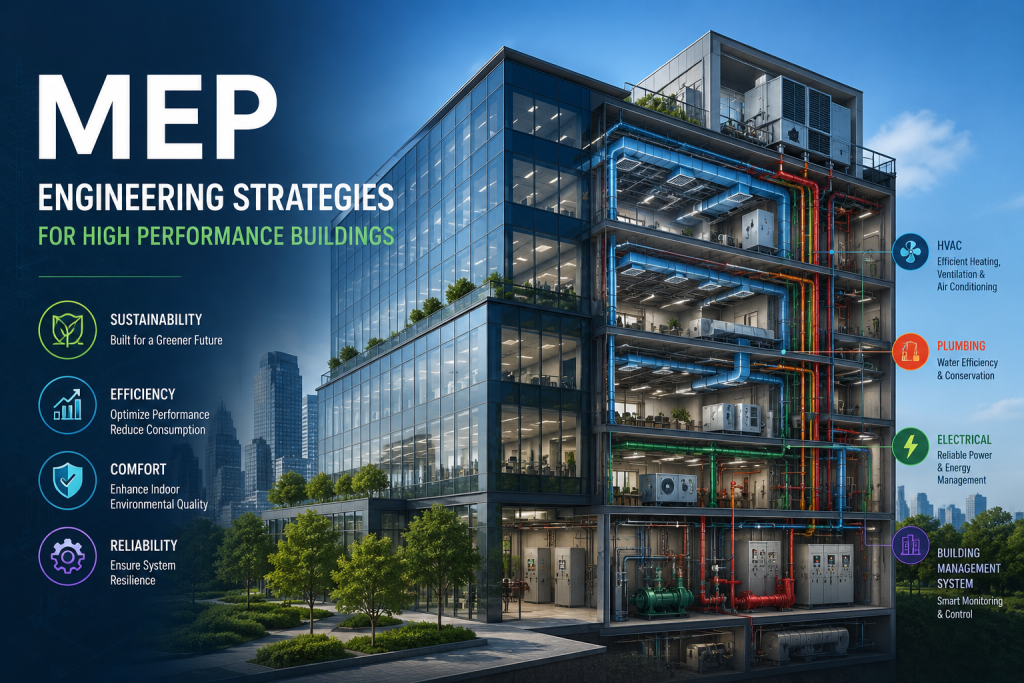
Modern buildings are expected to deliver far more than functional indoor space. Developers today focus on operational efficiency, sustainability, occupant comfort, and long-term performance just as much as architecture or structural quality. Behind all of these objectives lies one of the most important technical components of any building: the MEP engineering strategies.
In high-performance developments, MEP engineering is no longer treated as a support discipline added after design completion. It is now integrated into the core planning process as part of comprehensive engineering design services to ensure that buildings operate efficiently throughout their entire lifecycle.
What Is MEP Engineering and Why Is It Critical for Building Performance?
Understanding the importance of MEP engineering strategies begins with defining what MEP engineering actually includes and how it directly affects building functionality and operational efficiency.
What Does MEP Mean?
MEP stands for:
- Mechanical systems, including cooling, ventilation, and air conditioning
- Electrical systems, including lighting, power distribution, and backup systems
- Plumbing systems, including water supply, drainage, and wastewater management
Together, these systems form the operational backbone of modern buildings.
Role in Building Functionality
Without properly coordinated MEP systems, buildings cannot function effectively. MEP infrastructure supports:
- Thermal comfort and climate control
- Reliable power supply
- Water distribution and sanitation
- Fire safety systems
- Vertical transportation and automation systems
This makes coordinated MEP design one of the most critical aspects of building performance.
Connection Between MEP Systems and Building Performance
Well-planned MEP systems directly influence:
- Energy consumption
- Occupant comfort
- Indoor environmental quality
- Operational reliability
- Long-term maintenance requirements
In modern building performance engineering, MEP systems are carefully designed to optimize efficiency while maintaining safety and user comfort.
Why Is MEP Engineering So Important in UAE Buildings?
The growing importance of MEP engineering strategies in the UAE is closely linked to climate conditions, sustainability goals, and increasing operational demands in modern developments.
Extreme Climate and Cooling Demand
The UAE’s climate creates significant cooling requirements throughout most of the year. In many buildings, HVAC systems account for the largest share of operational energy consumption.
This makes efficient HVAC design and optimized HVAC systems design essential for reducing energy demand and operational costs.
Energy Consumption Challenges
As urban development expands rapidly, reducing energy usage has become a major priority for both developers and authorities.
Poorly designed MEP systems can lead to:
- Excessive electricity consumption
- High operational expenses
- Inefficient building performance
- Increased maintenance costs
Strong engineering coordination helps avoid these issues.
Regulatory Requirements
Authorities across the UAE continue introducing stricter requirements related to energy efficiency, sustainability, and operational performance.
Many projects are now expected to meet standards related to:
- Cooling efficiency
- Water conservation
- Fire safety
- Electrical performance
- Environmental sustainability
Sustainability and Green Building Goals
The UAE continues investing heavily in energy-efficient buildings UAE initiatives as part of broader sustainability and carbon reduction strategies.
This has increased demand for high-performance MEP systems capable of supporting:
- Reduced energy consumption
- Lower environmental impact
- Long-term operational efficienc
What Are the Most Effective MEP Engineering Strategies for High-Performance Buildings?
Getting MEP engineering strategies right starts way before construction — system efficiency, sustainability, and operational reliability all need to be baked into the design from the very beginning, not bolted on later.
Integrated System Coordination
One of the most effective strategies is early coordination between architectural, structural, and MEP disciplines.
This reduces:
- Design clashes
- Space conflicts
- Construction delays
- Rework during execution
High-Efficiency HVAC Systems
Modern buildings increasingly rely on advanced cooling technologies that improve performance while reducing energy demand.
This includes:
- Variable refrigerant flow systems
- Smart zoning systems
- Energy recovery systems
- Demand-controlled ventilation
These approaches improve both efficiency and occupant comfort.
Accurate HVAC Load Calculations
Reliable load calculations HVAC are essential for proper equipment sizing and system efficiency.
Incorrect calculations often result in:
- Oversized systems with unnecessary energy consumption
- Undersized systems unable to maintain comfort conditions
Smart Electrical Planning
Efficient electrical distribution systems help optimize power usage and improve operational reliability.
Modern electrical strategies often include:
- Smart metering systems
- Automated lighting controls
- Backup power integration
- Energy monitoring platforms
Water Efficiency Strategies
Effective electrical and plumbing engineering coordination helps reduce water waste through:
- Efficient plumbing layouts
- Low-consumption fixtures
- Smart water monitoring systems
Indoor Environmental Quality Optimization
Modern buildings increasingly prioritize indoor air quality through:
- Advanced filtration systems
- Ventilation optimization
- Humidity control systems
- Air quality monitoring technologies
This contributes directly to occupant health and comfort.
Building Automation and Smart Systems
Integrated smart building systems allow centralized control of HVAC, lighting, security, and energy management systems.
Automation improves operational efficiency while reducing manual intervention.
Lifecycle Performance Planning
Strong building performance optimization strategies focus not only on construction but also on long-term operational performance and maintenance efficiency.
What Technologies Are Transforming MEP Engineering in UAE?
The evolution of MEP engineering strategies is being driven by advanced digital technologies that improve coordination, analysis, and operational management across modern buildings.
BIM (Building Information Modeling)
BIM allows multidisciplinary teams to coordinate systems within a shared digital environment.
Benefits include:
- Better design coordination
- Reduced construction conflicts
- Improved project visualization
- More accurate quantity calculations
AI-Driven Energy Analysis
Artificial intelligence tools are increasingly used to analyze energy performance and identify opportunities for system optimization.
These technologies support:
- Energy forecasting
- Operational efficiency analysis
- Predictive maintenance planning
IoT-Based Building Systems
Connected sensors and IoT platforms allow buildings to monitor performance in real time.
This supports smarter management of:
- Cooling systems
- Lighting systems
- Water consumption
- Occupancy patterns
Smart Sensors
Modern sensor systems continuously collect operational data that helps improve building efficiency and maintenance planning.
Building Automation Systems
Automation platforms pull multiple building systems into one centralized point of control, which tightens up efficiency and keeps operational costs from climbing higher than they need to.
Across the UAE, these technologies are changing the way modern buildings get designed and managed in ways that weren’t possible even a few years ago.
How Does MEP Engineering Impact Long-Term Building Costs?
The financial side of MEP engineering strategies doesn’t stop at what it costs to build — the numbers keep mattering long after construction wraps up.
In most buildings, operational expenses continue for decades after project completion, making system efficiency one of the most important long-term financial considerations.
Operational Savings
Efficient MEP systems reduce ongoing expenses related to:
- Cooling and electricity usage
- Water consumption
- Equipment operation
This creates substantial long-term savings over the building lifecycle.
Maintenance Cost Reduction
Well-designed systems generally require:
- Less corrective maintenance
- Fewer equipment failures
- Reduced operational downtime
This improves reliability and lowers maintenance costs over time.
Lifecycle Cost Optimization
Modern building performance engineering increasingly focuses on lifecycle value rather than only initial installation costs.
Higher-quality systems may involve greater upfront investment but often deliver lower operational expenses throughout the building’s lifespan.
Return on Investment (ROI)
Efficient MEP systems can improve:
- Property value
- Tenant satisfaction
- Operational stability
- Sustainability certification potential
This strengthens long-term project profitability.
How Does UGCE Deliver High-Performance MEP Engineering Solutions in UAE?
Delivering effective MEP engineering strategies requires more than technical system design.
It takes integrated planning, tight coordination across disciplines, and a genuine understanding of how building systems talk to each other at every stage of the project — not just during design.
UGCE brings MEP engineering together through coordinated design methodologies built around:
- System efficiency
- Sustainability objectives
- Operational reliability
- Regulatory compliance
- Long-term building performance
Meeting technical requirements during construction is just the starting point — what really matters is the systems being put in place are still running the way they should for years.
Conclusion
High-performance buildings don’t run on any one system — they depend on efficient HVAC, reliable electrical infrastructure, optimized plumbing networks, and intelligent automation all pulling in the same direction within a coordinated engineering framework.
In the UAE, where climate conditions and operational demands place additional pressure on building performance, effective MEP strategies are becoming essential rather than optional.
Building design is heading toward a future where the engineering systems behind it have to juggle energy efficiency, occupant comfort, operational reliability, and sustainability all at once — and do it within urban environments that aren’t standing still.