
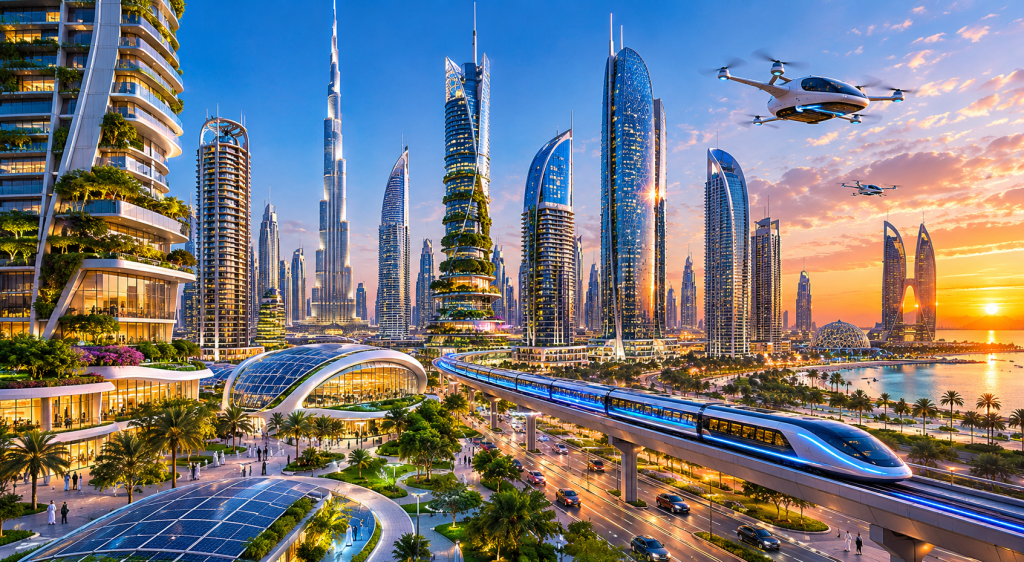
Over the past two decades, both cities have pushed vertical development to levels rarely seen elsewhere in the region, creating some of the world’s most recognizable towers and mixed-use developments.
Today, the conversation is no longer only about building taller structures. Where high-rise buildings in Dubai and high-rise buildings in Abu Dhabi are heading is becoming clearer — smarter engineering, a stronger push on sustainability, better operational efficiency, and developments that actually fit into the long-term urban picture rather than just occupying space in it.
Why Are High-Rise Buildings So Important in UAE Urban Development?
The continued growth of high-rise buildings in Dubai and high-rise buildings in Abu Dhabi is closely connected to how the UAE approaches urban expansion, land use, and economic development.
Land Optimization and Urban Density
A big part of what drives vertical development is simple — urban land is limited, and building upward is how cities make the most of what they have. High-rise projects let cities pack in larger populations and more commercial activity without having to keep pushing outward and eating up land that stretches further and further from the center.
This approach supports:
- Reduced infrastructure sprawl
- Better transportation connectivity
- More efficient urban planning
As a result, vertical urban development UAE strategies have become central to long-term city planning initiatives.
Economic Growth and Real Estate Demand
The UAE continues attracting international businesses, investors, and residents, which increases demand for residential, commercial, and mixed-use developments.
High-rise towers provide:
- Premium office spaces
- Luxury residential units
- Hospitality and tourism facilities
- Retail and entertainment destinations
This demand continues driving investment in high-rise construction Abu Dhabi and Dubai’s commercial real estate sector.
Global Positioning of UAE Cities
Skyscrapers have also become part of the UAE’s global identity. Landmark towers help position Dubai and Abu Dhabi as modern international cities associated with innovation, investment, and advanced urban development.
The evolution of skyscrapers Dubai future projects reflects this broader ambition to remain globally competitive.
Tourism and Investment Impact
Iconic towers contribute significantly to tourism and international investment by creating recognizable urban destinations that attract visitors, businesses, and real estate buyers from around the world.
What Are the Latest Trends in High-Rise Building Design in UAE?
The future of high-rise buildings in Dubai and high-rise buildings in Abu Dhabi is increasingly shaped by technology, sustainability, and integrated urban functionality rather than height alone.
Mixed-Use Vertical Communities
Modern towers are evolving into self-contained vertical communities that combine:
- Residential spaces
- Offices
- Hotels
- Retail areas
- Public amenities
This integrated model improves convenience while reducing transportation demand.
Smart Building Systems
Many new high-rise design Dubai projects incorporate automated systems that monitor:
- Energy consumption
- Air quality
- Security systems
- Occupancy patterns
These technologies improve operational efficiency and tenant experience.
Flexible and Adaptive Spaces
Developers are increasingly designing buildings with adaptable floor plans that can respond to changing market demands over time.
Human-Centered Design
Recent projects focus more on occupant well-being through:
- Natural lighting optimization
- Indoor environmental quality
- Shared public spaces
- Improved ventilation systems
This reflects broader changes in urban lifestyle expectations.
What Engineering Challenges Come with High-Rise Buildings in UAE?
Designing and constructing high-rise buildings in Dubai and high-rise buildings in Abu Dhabi involves complex engineering challenges that require advanced coordination between multiple disciplines.
Structural Stability and Wind Loads
Tall structures are exposed to significant wind forces, requiring advanced structural engineering high-rise solutions capable of maintaining stability and occupant comfort.
Engineers must carefully analyze:
- Wind pressure
- Building sway
- Structural load distribution
Foundation Engineering
High-rise towers require deep and highly specialized foundation systems capable of supporting extreme structural loads while adapting to varying ground conditions.
Vertical Transportation Systems
Elevator systems become increasingly complex in taller buildings where efficient movement of residents and occupants is critical for operational performance.
Fire Safety and Evacuation
Modern towers must comply with strict high-rise safety standards related to:
- Fire-resistant materials
- Smoke control systems
- Emergency evacuation routes
- Civil defense regulations
MEP Coordination Complexity
Mechanical, electrical, and plumbing systems become far more complicated in large vertical developments due to the scale of infrastructure integration required.
How Is Technology Transforming High-Rise Construction in UAE?
Technology is significantly changing how high-rise buildings in Dubai and high-rise buildings in Abu Dhabi are planned, engineered, and constructed.
BIM (Building Information Modeling)
BIM allows multidisciplinary teams to coordinate architectural, structural, and MEP systems within a single digital environment.
Benefits include:
- Reduced design conflicts
- Improved construction coordination
- Better project visualization
AI in Design Optimization
Artificial intelligence is increasingly used to analyze structural performance, optimize layouts, and improve energy efficiency during design stages.
Digital Twins
Digital twin systems create real-time digital replicas of buildings that help monitor operational performance and predict maintenance needs.
Prefabrication Methods
Off-site manufacturing and modular construction techniques are helping improve construction speed, reduce waste, and enhance quality control.
Advanced Construction Materials
The future of tall buildings depends heavily on advanced materials construction technologies that improve:
- Structural strength
- Fire resistance
- Sustainability performance
- Material efficiency
These innovations are reshaping the future of tall buildings engineering UAE projects.
What Role Does Sustainability Play in the Future of High-Rise Buildings?
Sustainability has moved up the priority list in a big way when it comes to shaping where high-rise buildings in Dubai and high-rise buildings in Abu Dhabi are headed next.
Carbon Reduction Goals
The UAE is increasingly focused on reducing emissions through energy-efficient urban development and lower operational carbon footprints.
Energy Efficiency
Modern towers are designed to optimize:
- Cooling systems
- Lighting performance
- Building automation
- Renewable energy integration
This reduces long-term operational costs and environmental impact.
Water Management
Water efficiency systems are becoming increasingly important in high-rise developments due to regional climate conditions and sustainability targets.
Green Building Certifications
Developers are actively going after international sustainability certifications that put a real number on environmental performance, energy use, and how well a building actually serves the people inside it.
That push isn’t staying contained to individual projects either — it’s starting to reshape engineering standards and pull long-term urban planning policy in a new direction.
How Does UGCE Support High-Rise Building Projects in UAE?
Bringing high-rise buildings in Dubai or Abu Dhabi isn’t something that happens in silos — it takes strong technical coordination across structural engineering, infrastructure planning, MEP systems, regulatory compliance and architectural concepts all moving in sync.
UGCE approaches high-rise projects through integrated engineering coordination that supports:
- Structural efficiency
- Design optimization
- Infrastructure integration
- Regulatory compliance
- Long-term operational performance
The focus is not only on tower construction itself, but also on how vertical developments interact with transportation systems, utilities, public infrastructure, and surrounding urban environments.
FAQs
Is Abu Dhabi growing faster than Dubai?
Both cities continue to grow rapidly, although growth patterns differ. Dubai keeps running on the energy of tourism, real estate, and international business, while Abu Dhabi is pushing its growth through infrastructure investment, government-led development initiatives, and a deliberate move toward industrial diversification.
Conclusion
High-rise development in the UAE is moving past the era of building for the skyline alone — what’s coming next is smarter, more sustainable, and more technologically advanced than what’s already there. As cities keep stacking upward, the engineering challenges that come with it are getting harder to untangle, demanding a level of integration between structural systems, infrastructure, digital technologies, and sustainability strategies that simply wasn’t required before. The next generation of high-rise buildings in Dubai and high-rise buildings in Abu Dhabi will likely focus less on height alone and more on efficiency, resilience, connectivity, and long-term urban performance.