
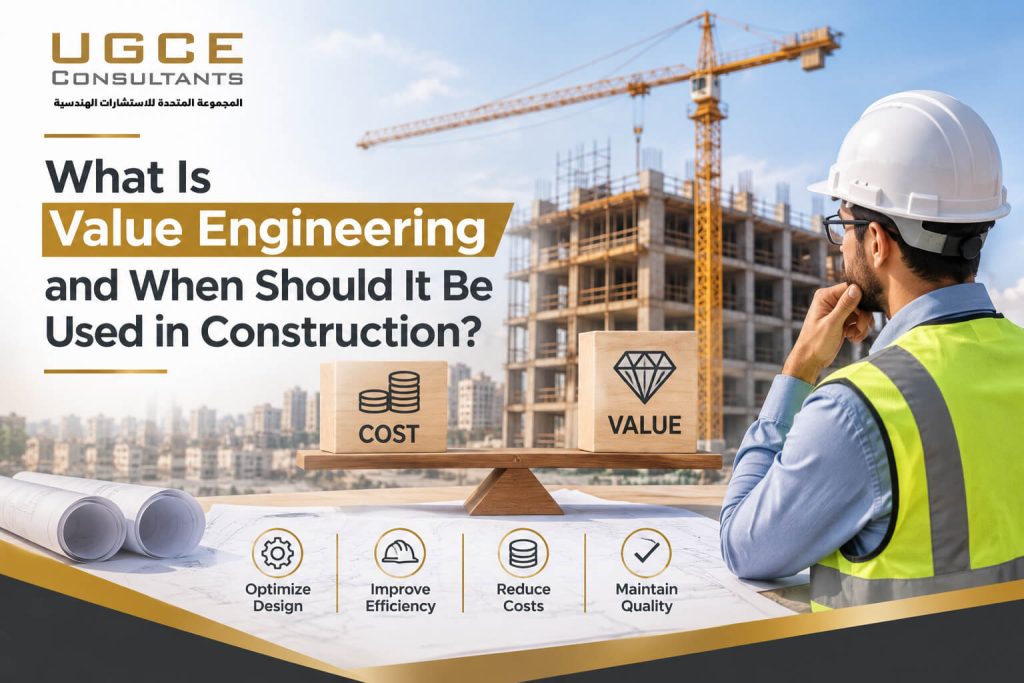
Building anything means juggling design requirements, technical performance, budget, and the long-term needs of the people who will run the building. That’s why choosing materials, structural systems, equipment, and construction methods can’t come down to the lowest price alone.
Each of those choices shapes how the building performs, what it costs to build, and what it will demand from owners throughout its service life.
What Is Value Engineering in Construction?
Value engineering in construction is a systematic process of analyzing a project’s functions, requirements, materials, systems, and design decisions to identify alternative solutions that deliver the required performance and functionality at an appropriate overall cost.
A commonly used relationship expresses value as:
Value=FunctionCost
This means that value can improve when a solution provides the required function at a lower cost, or when it delivers better performance without a proportionate increase in cost.
In construction projects, improving value may involve:
- Maintaining function while reducing cost: Selecting an alternative material or system that meets the same requirements with lower overall expenditure.
- Improving function without significantly increasing cost: Choosing a solution that enhances usability, performance, or efficiency within an acceptable budget.
- Improving performance and reducing lifecycle costs: Looking at alternatives that could cut down on energy use, maintenance demands, or how often things need replacing over the life of the building.
- Selecting more efficient design or construction solutions: Evaluating different structural arrangements, building systems, or construction methods.
Value engineering therefore requires technical evaluation, cost awareness, and an understanding of the building’s intended use.
What Is the Difference Between Value Engineering and Cost Cutting?
Cost cutting generally focuses on reducing spending, while value engineering evaluates whether the required project functions can be delivered more efficiently without compromising essential performance.
| Value Engineering | Simple Cost Cutting |
| Focuses on function and overall value. | Focuses primarily on reducing expenditure. |
| Evaluates alternative solutions. | May simply remove or downgrade components. |
| Considers technical performance. | May compromise performance to lower costs. |
| Can consider lifecycle costs. | Usually focuses on upfront costs. |
| Uses a structured evaluation process. | May involve individual or ad-hoc budget reductions. |
If the project team swaps it for a cheaper material without first checking durability, slip resistance, maintenance needs, or whether it suits the intended use, the budget may look better on paper, but the problems that follow can outweigh the savings.
When Should Value Engineering Be Used in a Construction Project?
Value engineering can be brought in at any stage of a construction project, but when it happens makes a real difference. Timing shapes how many alternatives are still available, what it costs to implement changes, and how much coordination those changes will need.
During Concept and Feasibility
The concept and feasibility stages are often where value engineering can do the most good. The overall development approach is still being worked out, and plenty of major decisions haven’t been locked in yet.
Value engineering can review:
- Project objectives and functional requirements.
- Preliminary architectural layouts.
- Proposed structural and building systems.
- Material and construction strategies.
- Initial cost assumptions.
- Alternative development options.
This stage is particularly valuable because changing the overall concept is generally more straightforward than modifying a fully developed design or completed construction work.
During Detailed Design
Value engineering during detailed design focuses on refining the selected project concept and reviewing the technical decisions being developed by the engineering team.
Architects and engineers may evaluate:
- Structural systems and configurations.
- Building materials.
- Mechanical, electrical, and plumbing (MEP) systems.
- Internal and external finishes.
- Construction methods.
- Equipment specifications.
At this stage, proposed changes need to be evaluated across all affected disciplines. A structural modification, for instance, may influence architectural layouts, ceiling levels, service routes, and other engineering systems.
Before Tendering and Procurement
Before tendering and procurement, value engineering can help review specifications and proposed systems before contractual or purchasing commitments are made.
The project team may evaluate:
- Alternative materials and products.
- Equipment options and technical specifications.
- Construction methods.
- Supplier availability and lead times.
- Specification requirements.
- Installation and maintenance considerations.
This stage provides an opportunity to identify suitable alternatives before procurement decisions restrict the available options.
During Construction
Value engineering can still be considered during construction, but implementing changes may become more complicated.
By this stage, some materials may already have been purchased, construction work may be completed, and contractual obligations may limit the available alternatives.
Potential considerations include:
- Materials already ordered or delivered.
- Work already completed.
- Contract requirements and approved specifications.
- Potential schedule impacts.
- Required design and authority approvals.
- Rework or additional coordination.
A late-stage proposal should therefore be evaluated carefully to determine whether its expected benefits justify the cost, disruption, and technical implications of implementation.
What Does the Value Engineering Process Involve?
Value engineering follows a structured process that helps project teams move from identifying potential cost and performance improvements to selecting and implementing suitable alternatives.
Although the exact methodology may vary depending on the project, it commonly involves six steps.
1. Identify Project Functions
It starts with getting clear on what each major building component, system, or design element is actually meant to do.
Engineers look at its purpose, the performance it needs to deliver, the standards that apply, and how it connects to the rest of the project.
2. Identify Cost Drivers
The team then reviews the project to understand which materials, systems, specifications, or design decisions have the greatest influence on cost.
Cost drivers may include:
- Structural materials and construction methods.
- Foundation requirements.
- Building envelope systems.
- HVAC and electrical equipment.
- Finishes and specialist materials.
- Installation complexity and labour requirements.
- Maintenance and operational demands.
Identifying major cost drivers helps focus the value engineering effort on areas where alternative solutions may offer meaningful benefits.
3. Explore Alternatives
Once the main functions and cost drivers are understood, the team develops potential alternatives.
These may involve different:
- Materials and product specifications.
- Structural or MEP systems.
- Architectural and engineering design approaches.
- Construction methods and sequencing.
- Equipment options.
- Installation strategies.
At this stage, it is useful to consider several possible approaches rather than immediately selecting the lowest-priced option.
4. Evaluate Alternatives
Each proposed alternative should be assessed against the project’s technical and commercial requirements.
Relevant evaluation criteria include:
- Initial and overall cost.
- Technical performance.
- Durability and expected service life.
- Safety and regulatory compliance.
- Functionality and usability.
- Maintenance requirements.
- Construction and installation requirements.
- Energy performance.
- Lifecycle implications.
The evaluation should also consider whether a change in one discipline creates additional requirements or costs elsewhere.
5. Select the Best-Value Option
After comparing the alternatives, the project team selects the solution that offers the most appropriate balance of function, performance, cost, and long-term requirements.
6. Implement and Document Changes
Once an alternative is approved, the relevant design documentation, specifications, calculations, schedules, and cost information must be updated.
Changes should be communicated to all affected disciplines and project stakeholders.
Proper documentation is essential to ensure that the approved solution is reflected consistently across drawings, specifications, procurement information, and construction documents.
Which Parts of a Construction Project Can Be Evaluated Through Value Engineering?
Value engineering can reach across many different building components and systems, as long as each proposed alternative is checked against what that element is meant to do and what the project requires of it.
The following areas often provide opportunities for evaluation.
Structural Systems
Structural design choices carry a lot of weight when it comes to cost.
Potential areas for value engineering include:
- Structural materials.
- Column grids and structural layouts.
- Beam and slab configurations.
- Structural spans.
- Foundation solutions.
- Construction methods and sequencing.
The objective is to improve structural efficiency without compromising the building’s engineering requirements.
MEP Systems
Mechanical, electrical, and plumbing systems are another important area for value engineering because equipment selection and system configuration can affect installation costs, energy consumption, maintenance, and operational performance.
Engineers may evaluate:
- HVAC system configurations.
- Lighting systems and controls.
- Electrical distribution.
- Plumbing systems.
- Equipment specifications.
- Energy efficiency strategies.
- System accessibility and maintenance requirements.
Take HVAC as an example. One option might cost less to buy but use more energy, while another asks for a bigger upfront spend and pays it back through lower running costs, less space, or easier maintenance.
Materials and Finishes
Material and finish specifications can influence both the initial construction budget and the building’s long-term performance.
Value engineering may compare alternatives based on:
- Initial purchase and installation costs.
- Durability and expected service life.
- Maintenance requirements.
- Availability and procurement lead times.
- Technical performance.
- Appearance and design intent.
- Suitability for the intended environment.
A material that is cheaper to purchase may not provide better value if it requires more frequent repairs or replacement.
Construction Methods
The construction approach itself can also be evaluated through value engineering.
Alternative construction methods may offer opportunities to improve:
- Construction efficiency.
- Project schedule.
- Labour requirements.
- Material waste.
- Site logistics.
- Installation quality.
- Overall construction cost.
The team should assess whether the alternative is practical for the specific project rather than assuming that a particular construction method will always be more efficient.
What Are the Benefits of Value Engineering?
When it’s applied with care, value engineering helps project teams decide with better information, whether the choice is about design, materials, systems, or how the building will be constructed.
Its potential benefits include:
- Better cost efficiency.
- Improved project value.
- More informed design decisions.
- Reduced unnecessary expenditure.
- Better use of materials and resources.
- Improved constructability.
- Potentially lower lifecycle costs.
- Better alignment with project objectives.
Value engineering doesn’t promise a lower final cost, and it’s worth being upfront about that. Some alternatives actually call for extra investment, either to get better performance or to bring operating costs down later.
How Does Value Engineering Consider Lifecycle Costs?
A construction solution should not be evaluated only by its initial purchase or installation cost. Buildings require energy, maintenance, repairs, and sometimes component replacement throughout their service life. This makes evaluating long-term operational and maintenance costs an essential part of value engineering, helping project teams understand how different design and material choices affect a building throughout its lifecycle.
Relevant factors may include:
- Energy consumption: The ongoing energy required to operate building systems.
- Maintenance: Routine servicing, inspections, and upkeep.
- Repairs: The cost of addressing wear, defects, or damage.
- Replacement frequency: How often components or equipment may need to be replaced.
- Durability: How well materials and systems maintain their performance over time.
- Operational costs: Expenses associated with running and managing the building.
- Expected service life: The period over which a component or system is expected to provide its intended function.
Consider two material options for a building’s external finishes. The first has a lower initial cost but may require frequent maintenance and replacement.
What Should Be Considered Before Approving a Value Engineering Proposal?
Before approving a value engineering proposal, project stakeholders should confirm that the alternative provides the intended benefits without introducing unacceptable technical, operational, or construction risks.
The following checklist can help structure the review.
Value engineering review checklist
0/12 reviewed
Does the alternative provide the required function?
Does it meet applicable regulations and technical standards?
Does it maintain the required level of safety?
Will it affect durability or expected service life?
Will it affect energy performance?
What are the maintenance and repair implications?
Will it affect the project schedule?
Is the alternative readily available?
Will it affect other engineering disciplines?
Could it create new design coordination issues?
What are its lifecycle cost implications?
Does it align with the client’s priorities and project objectives?
Reset checklist
One particularly important consideration is the effect of a proposed change on other engineering disciplines.
Who Should Be Involved in Value Engineering?
Value engineering works best as a collaborative process involving the people responsible for the project’s objectives, design, cost, construction, and operation.
Depending on the project’s scale and complexity, participants may include:
- Client or developer: Defines project priorities, functional requirements, budget expectations, and acceptable performance criteria.
- Architects: Evaluate building layouts, space planning, materials, finishes, and design intent.
- Structural engineers: Review structural systems, materials, foundations, and construction requirements.
- MEP engineers: Assess mechanical, electrical, plumbing, and other building services.
- Quantity surveyors and cost consultants: Weigh up the cost implications, compare the alternatives side by side, and feed the findings into cost planning.
- Project managers: Coordinate the review process and assess implications for scope, schedule, and delivery.
- Contractors: Provide practical insight into construction methods, site conditions, sequencing, and installation requirements.
- Specialist consultants: Contribute technical expertise where specific systems or performance requirements are involved.
- Suppliers: Provide relevant information about product availability, specifications, installation, warranties, and maintenance where appropriate.
The involvement of each participant depends on the proposed change.
What Are the Risks of Poorly Executed Value Engineering?
Value engineering can lead to better project decisions, but a change that hasn’t been properly evaluated can cause problems that cancel out whatever it saved at the start.
Some potential risks include:
- Reduced performance.
- Lower durability.
- Increased maintenance costs.
- Design conflicts.
- Construction delays.
- Reduced functionality.
- Regulatory issues.
- Higher lifecycle costs.
That’s why value engineering needs to rest on evidence, clear technical requirements, and a structured evaluation process rather than on quick judgment calls.
How Can Value Engineering Improve Construction Project Outcomes?
Good value engineering gives project teams a clearer basis for their decisions by looking at how design requirements, technical performance, cost, and the building’s long-term needs relate to one another.
Its value extends across several stages of project development.
- Feasibility: Looking at different development approaches early in planning gives the team a chance to find practical solutions before major design and financial commitments are locked in.
- Engineering design: Looking closely at structural systems, materials, equipment, and specifications gives the team a way to refine its technical solutions without giving up the performance the project requires.
- Design coordination: Checking how a proposed change affects the architectural, structural, and MEP disciplines cuts down on conflicts and confirms that each alternative actually fits within the wider building design.
- Project management: Looking at what a change means for cost, schedule, procurement, and construction gives stakeholders a firmer basis for their decisions and makes it easier to keep everyone coordinated.
- Lifecycle planning: Looking at operational costs, maintenance, durability, and replacement requirements keeps decisions tied to what the building will need over the long run, not just on day one.
When value engineering happens, and how well it’s carried out, both count. Done early, it leaves plenty of room to explore alternatives. Done later, every change has to be weighed against procurement commitments, completed work, contractual obligations, and the schedule.
Conclusion
Value engineering in construction gives project teams a structured way to get more from a project by examining its functions, materials, systems, design decisions, and overall costs.
It isn’t tied to one phase. Value engineering can come in during concept development, feasibility, detailed design, procurement, and even construction itself. However, the earlier alternatives are evaluated, the more opportunity the project team generally has to compare solutions before decisions become difficult or expensive to change.
At UGCE, Feasibility Studies, Engineering Design, and Project Management services can support developers and project teams in evaluating technical alternatives, coordinating design requirements, and making informed decisions throughout project development. The objective is to develop engineering solutions that balance functionality, performance, cost, and long-term value.