
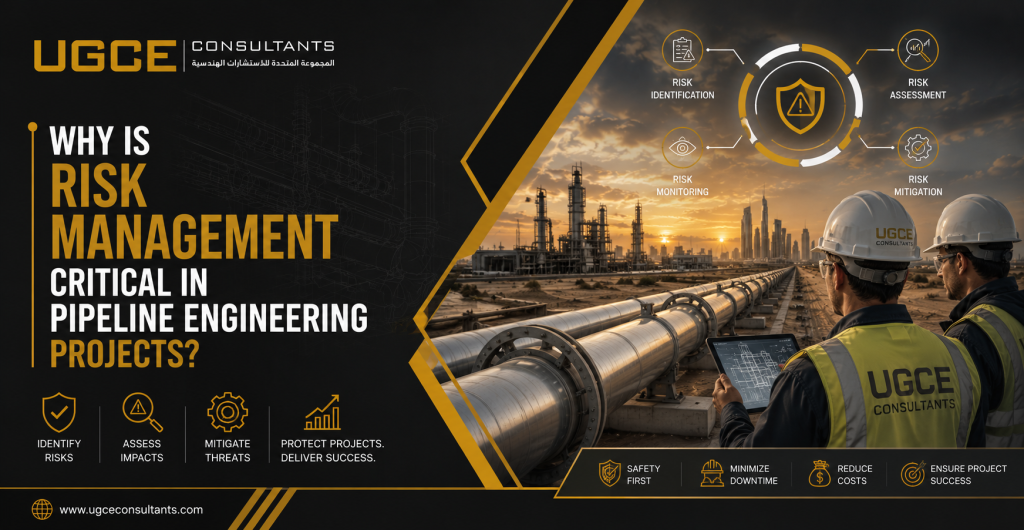
Pipelines are among the most important assets supporting modern infrastructure. Oil, natural gas, water, chemicals, and other essential resources travel vast distances through pipelines — linking cities, industrial facilities, and entire regions in ways that keep economies and communities running.
Because they often operate under high pressure and in demanding environments, even a minor issue can quickly turn into a serious safety, operational, or environmental problem.
This is why Pipeline engineering extends far beyond designing and constructing a pipeline.
What Is Pipeline Engineering and Why Does It Matter?
Pipeline engineering spans the full life of a pipeline — from the early planning and design stages all the way through construction, operation, and long-term maintenance — making sure liquids, gases, and other materials get where they need to go safely and without unnecessary loss.
These networks sit at the heart of a wide range of industries, including:
- Oil and gas
- Water supply
- Wastewater treatment
- Petrochemicals
- Mining
- Industrial manufacturing
Many of these systems stretch for hundreds of kilometers and are built to keep running under some pretty demanding conditions.
Successful Pipeline design must balance several objectives:
- Safe operation throughout the pipeline’s lifespan.
- Reliable flow under varying operating conditions.
- Efficient maintenance and inspection.
- Compliance with engineering standards and environmental regulations.
Meeting these goals depends on making the right engineering decisions from the earliest planning stages and continuing that same level of attention throughout the pipeline’s operational life.
What Types of Risks Can Affect Pipeline Projects?
No Pipeline engineering project is completely free of risk. These challenges don’t wait for a convenient moment to show up.
The most common risk categories include:
Technical Risks
Technical issues may result from:
- Inadequate design assumptions.
- Incorrect material selection.
- Equipment failure.
- Construction defects.
Operational Risks
Operational challenges often involve:
- Pressure fluctuations.
- Equipment malfunction.
- Human error.
- Improper operating procedures.
Environmental Risks
Pipeline systems are exposed to environmental conditions such as:
- Corrosive soil.
- Flooding.
- Extreme temperatures.
- Ground movement.
These conditions can accelerate deterioration if not properly managed.
Financial Risks
Unexpected project costs may arise from:
- Construction delays.
- Regulatory changes.
- Material price increases.
- Pipeline failures requiring emergency repairs.
Managing these risks requires a structured approach to Engineering risk management, ensuring that potential issues are identified before they become costly problems.
How Can Design-Related Risks Impact Pipeline Performance?
Many long-term pipeline problems originate during the design stage. Decisions made early in a Pipeline engineering project often determine how safely and efficiently the system performs throughout its operational life.
Route Selection
Selecting an appropriate pipeline route involves evaluating:
- Ground conditions.
- Environmental sensitivity.
- Existing infrastructure.
- Population density.
- Future development plans.
Poor route selection can increase construction costs, maintenance requirements, and operational risks.
Material Selection
Pipeline materials must withstand expected operating pressures, transported fluids, and environmental conditions.
Choosing unsuitable materials may lead to:
- Accelerated corrosion.
- Structural deterioration.
- Reduced service life.
- Higher maintenance costs.
Hydraulic Design
Proper hydraulic analysis ensures that the pipeline maintains adequate pressure and flow throughout the network.
Poor hydraulic design may result in:
- Pressure losses.
- Flow instability.
- Increased pumping costs.
- Reduced operational efficiency.
Design Errors and Inadequate Planning
Incomplete engineering analysis or poor coordination between disciplines can create problems that remain hidden until construction or operation begins.
These early mistakes often lead to:
- Costly design revisions.
- Construction delays.
- Increased maintenance.
- Lower Pipeline reliability.
Strong planning significantly reduces long-term project risks.
Why Is Corrosion One of the Biggest Threats to Pipeline Integrity?
Corrosion remains one of the leading causes of pipeline failures worldwide, making it one of the most important concerns in Pipeline engineering.
Internal Corrosion
Internal corrosion occurs when transported fluids react with pipeline materials.
Common contributing factors include:
- Water content.
- Chemical contaminants.
- Gas composition.
- Flow conditions.
External Corrosion
External corrosion is influenced by environmental conditions surrounding the pipeline.
Examples include:
- Soil moisture.
- Salt exposure.
- Microbial activity.
- Damaged protective coatings.
Corrosion Prevention
Reducing corrosion requires multiple protection strategies, including:
- Protective coatings.
- Cathodic protection systems.
- Corrosion-resistant materials.
- Chemical inhibitors where appropriate.
Monitoring Corrosion
Regular Pipeline monitoring allows engineers to detect deterioration before structural damage occurs.
Continuous monitoring supports more effective Pipeline failure prevention while extending asset life.
How Can Risk Management Prevent Pipeline Failures?
Successful Pipeline engineering depends on proactive risk management rather than reacting to failures after they occur.
Risk Identification
Managing risk starts with understanding what could go wrong and identifying the issues that have the potential to affect pipeline performance.
Some of the most common risks include:
- Corrosion.
- Ground movement.
- Equipment failure.
- Third-party damage.
- Operational errors.
Pipeline Risk Assessment
A structured Pipeline risk assessment helps teams understand not only how likely each risk is to occur, but also the impact it could have if it does.
That information makes it easier to focus time, effort, and resources where they’ll have the greatest effect.
Risk Mitigation Planning
Once risks are identified, mitigation measures may include:
- Design improvements.
- Protective systems.
- Inspection programs.
- Emergency response planning.
- Maintenance strategies.
Ongoing Monitoring and Review
Risk management continues throughout the pipeline’s operational life.
Regular reviews allow engineers to update risk assessments as operating conditions change.
This continuous process strengthens both Infrastructure risk management and long-term pipeline performance.
What Role Does Pipeline Integrity Management Play in Long-Term Safety?
Maintaining safe operations throughout a pipeline’s lifecycle requires more than occasional inspections. Long-term safety depends on a structured Pipeline integrity management program.
What Is Pipeline Integrity Management?
Pipeline integrity management brings together the processes and strategies needed to monitor pipeline condition, manage potential risks, and maintain reliable operation throughout its service life.
That typically includes:
- Risk assessment.
- Inspection planning.
- Corrosion control.
- Maintenance scheduling.
- Performance monitoring.
- Regulatory compliance.
These activities support effective Asset integrity management across the entire infrastructure network.
Why Is Continuous Monitoring Important?
Continuous monitoring provides early warning of changing pipeline conditions before they develop into failures.
Monitoring programs may include:
- Pressure monitoring.
- Leak detection systems.
- Corrosion monitoring.
- Structural movement analysis.
- Flow monitoring.
The earlier a problem gets caught, the easier it is to fix — and that usually means lower costs and a pipeline that stays safer and more reliable for longer.
How Do Inspections and Monitoring Technologies Reduce Risks?
Regular Pipeline inspection is one of the most effective ways to reduce operational risk.
Inspection programs allow engineers to:
- Detect corrosion.
- Identify coating damage.
- Locate structural defects.
- Monitor weld quality.
- Verify operational performance.
Modern technologies have significantly improved inspection capabilities.
Examples include:
- Intelligent pipeline inspection tools (“smart pigs”).
- Drone-based monitoring.
- Remote sensing systems.
- Fiber optic monitoring.
- Real-time digital monitoring platforms.
These technologies improve decision-making while supporting more efficient Pipeline maintenance programs.
How Do Environmental and Safety Risks Influence Pipeline Engineering Decisions?
Environmental protection and public safety influence nearly every decision made during Pipeline engineering.
Engineers evaluate environmental risks throughout project planning by considering:
- Sensitive ecosystems.
- Water crossings.
- Protected habitats.
- Population centers.
- Seismic activity.
- Climate conditions.
Safety considerations also affect:
- Pipeline routing.
- Material selection.
- Operating pressure.
- Emergency shutdown systems.
- Inspection frequency.
Balancing environmental protection with operational performance helps ensure responsible infrastructure development while maintaining regulatory compliance.
What Are the Best Practices for Effective Pipeline Risk Management?
Good risk management isn’t built around one fix. It comes from layering solid engineering with consistent operational practices and a genuine willingness to keep improving how things are done over time.
Some of the approaches that make the biggest difference include:
Perform Comprehensive Risk Assessments
Identify potential hazards before construction begins and update assessments throughout the pipeline’s lifecycle.
Invest in Quality Design
Strong engineering reduces future maintenance requirements and minimizes operational failures.
Prioritize Preventive Maintenance
Regular maintenance is more cost-effective than responding to emergency failures after they occur.
Use Modern Monitoring Technologies
Digital monitoring systems provide real-time information that improves operational decision-making.
Strengthen Project Coordination
Strong Pipeline project management depends on everyone involved working together, from designers and contractors to operators and maintenance teams, throughout every stage of the project.
When those efforts stay aligned, pipelines are safer to operate, assets last longer, and overall system performance improves.
FAQs
What is pipeline integrity management?
Pipeline integrity management is a structured process that combines inspection, maintenance, risk assessment, monitoring, and operational planning to ensure pipelines remain safe, reliable, and compliant throughout their service life.
Why is continuous pipeline monitoring important?
When pipeline conditions are being monitored closely, corrosion, pressure changes, leaks, and other issues tend to show up early enough that teams can actually do something about them before they become expensive problems.
Conclusion
Pipeline engineering systems support much of the infrastructure that keeps industries, communities, and essential services running.
Because of that, managing risk isn’t something that happens at a single stage of a project—it needs to be considered from the first design decisions through long-term operation and maintenance.
Every choice, from route selection and material specification to inspection and monitoring, plays a part in how safely and reliably a pipeline performs over time.