
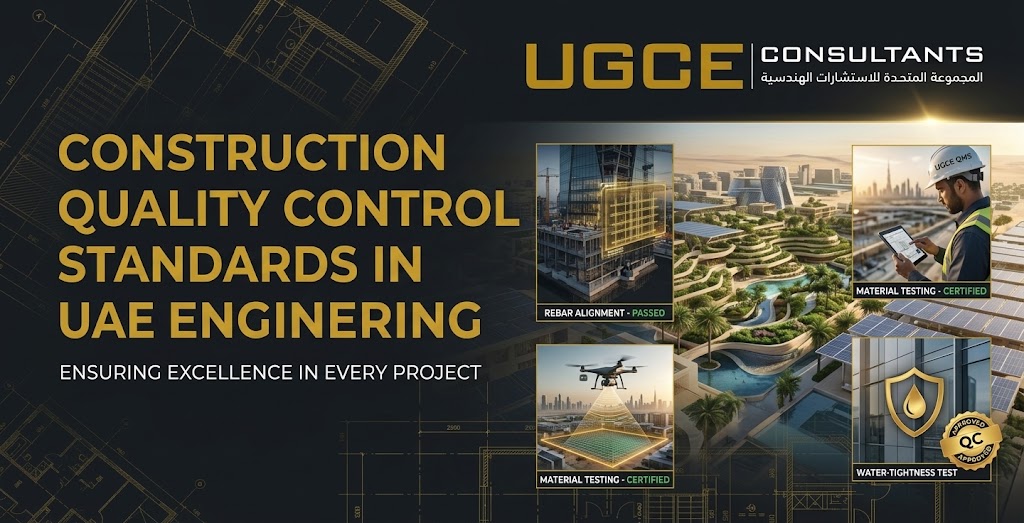
The success of any construction project depends on far more than innovative design or advanced construction techniques. It comes down to consistently delivering work that holds up against defined quality requirements at every phase. not just the ones that are easy to check.
From selecting approved materials and inspecting structural elements to verifying that systems actually perform the way they’re supposed to, keeping construction quality standards where they need to be.
What Is Construction Quality Control?
Construction quality control is the disciplined process of inspecting, testing, monitoring, and verifying what’s actually being built — making sure the completed work lines up with project specifications, engineering drawings, applicable standards, and regulatory requirements rather than just assuming it does
Definition
Construction quality control puts structured inspection procedures, material verification, workmanship assessments, laboratory testing, and documentation processes into practice — each one there to confirm that what’s being built actually meets the project’s technical requirements rather than falling short in ways that only show up later.
Difference Between Quality Control (QC) and Quality Assurance (QA)
Construction quality assurance focuses on preventing defects before construction begins.It sets the policies, procedures, quality plans, training programs, and management systems that define how work should be carried out in the first place.
Quality Control is what comes after — going out into the field to verify through inspections, testing, measurements, and continuous monitoring that construction activities are actually following those established procedures rather than drifting from them
In simple terms:
Quality Assurance asks:
- Are the correct quality systems in place?
- Are approved procedures being followed?
- Have project risks been properly addressed?
Quality Control asks:
- Does the completed work meet specifications?
- Were approved materials used?
- Does the finished construction comply with required standards?
Together, QA and QC create a comprehensive framework for delivering high-quality construction projects.
Importance Throughout the Project Lifecycle
Quality control should never be viewed as a single activity performed at project completion.
Instead, construction quality management extends across every project phase, including:
- Design review
- Material selection
- Procurement
- Site preparation
- Construction activities
- Equipment installation
- Testing and commissioning
- Final inspections
- Project handover
Continuous quality monitoring throughout the project helps identify issues early, reducing costly rework while improving overall project performance.
Why Quality Control Is Essential in UAE Construction Projects
The UAE has built a global reputation for taking on complex construction projects that leave very little margin for error — and the engineering standards that reputation rests on are anything but ordinary.
High-rise towers, transportation infrastructure, industrial developments, healthcare facilities, and luxury residential communities all demand rigorous quality control processes to make sure what gets built stays safe and performs the way it was designed to for the long haul.
Safety
When inspections are done properly, structural components, fire protection systems, electrical installations, and mechanical equipment don’t just get installed — they get installed correctly, and the people inside the building can count on them to perform safely throughout its operational life.
Structural Integrity
Poor workmanship, substandard materials, or installation errors can compromise structural performance and increase maintenance costs.
Regulatory Compliance
Quality control procedures help verify compliance before deficiencies become major regulatory issues, reducing approval delays and minimizing project risks.
Cost Reduction
Correcting poor workmanship after completion often requires demolition, reconstruction, schedule extensions, and additional labor costs.
Reducing rework improves both project budgets and construction schedules.
Risk Management
Structured quality inspections reduce uncertainty by ensuring work progresses according to approved specifications while identifying potential issues before they escalate into significant project challenges.
Long-Term Building Performance
High-quality construction extends far beyond project completion.
Buildings constructed according to rigorous building quality standards generally experience:
- Lower maintenance costs
- Improved durability
- Better operational efficiency
- Longer service life
- Higher asset value
Investing in quality during construction delivers measurable long-term benefits for owners, developers, and occupants alike.
Key Construction Quality Control Standards in the UAE
Maintaining high construction quality standards requires compliance with a combination of local regulations, international quality management systems, engineering codes, and project-specific technical specifications.
UAE Building Codes and Local Municipality Requirements
Construction projects must comply with the regulations established by local authorities such as municipalities and relevant government agencies.
ISO 9001 Quality Management Systems
ISO 9001 construction quality management principles provide a structured framework for managing quality throughout engineering and construction projects.
Organizations implementing ISO 9001 establish documented procedures covering:
- Quality planning
- Process control
- Continuous improvement
- Corrective actions
- Internal audits
- Customer satisfaction
Adopting internationally recognized quality management systems strengthens consistency while improving project performance.
Fire and Life Safety Regulations
Quality inspections make sure fire-rated assemblies, emergency exits, detection systems, suppression systems, smoke management, and evacuation routes aren’t just present on paper — they’re verified to comply with approved fire engineering requirements in the real world where it actually matters.
Material Testing Standards
Construction quality begins with approved materials.
Material inspections typically include laboratory testing and verification of:
- Concrete strength
- Reinforcing steel
- Structural steel
- Aggregates
- Asphalt
- Soil properties
- Waterproofing systems
- Mechanical components
Accurate construction testing and inspection procedures help ensure materials perform according to project specifications.
Environmental and Sustainability Requirements
Environmental compliance has become increasingly important across UAE construction projects.
Quality management procedures verify compliance with environmental regulations relating to:
- Waste management
- Resource efficiency
- Water conservation
- Pollution control
- Sustainable construction practices
Integrating sustainability into quality management supports both regulatory compliance and long-term environmental performance.
Occupational Health & Safety Standards
Construction quality extends beyond finished structures to include safe construction practices.
Quality inspections help verify that contractors implement appropriate occupational health and safety measures, including:
- Safe working procedures
- Equipment inspections
- Personal protective equipment
- Temporary works safety
- Hazard management
- Site housekeeping
Maintaining strong health and safety standards contributes to both project quality and workforce wellbeing.
Core Elements of an Effective Construction Quality Control Plan
A successful quality control program requires structured procedures that consistently verify construction activities throughout project execution.
Material Inspection
Before installation, materials should be inspected to verify compliance with approved specifications, manufacturer requirements, certifications, and project standards.
Workmanship Verification
Regular inspections verify that construction activities are completed according to approved engineering drawings, technical specifications, and accepted industry practices.
Site Inspections
Routine site quality inspection activities allow engineers and quality inspectors to monitor ongoing construction work, verify compliance, identify deficiencies, and confirm corrective actions before work progresses further.
Testing and Commissioning
Mechanical, electrical, plumbing, fire protection, structural, and utility systems undergo commissioning procedures to verify functionality, reliability, safety, and operational performance before project handover.
Documentation and Reporting
Inspection records, laboratory reports, material approvals, site observations, testing results, and quality reports provide traceability throughout the project lifecycle while supporting regulatory compliance and future maintenance activities.
Non-Conformance Reports (NCRs)
Non-Conformance Reports (NCRs) document instances where completed work fails to meet project specifications or approved standards.
Corrective and Preventive Actions (CAPA)
Corrective and Preventive Actions (CAPA) address both existing quality issues and their underlying causes.
Construction Quality Control Process
Maintaining high construction quality standards requires a structured process that begins long before construction starts and continues until the project is successfully handed over to the client.
Project Planning
At this stage, project teams establish quality objectives, define inspection procedures, assign responsibilities, prepare quality documentation, and identify applicable standards and regulatory requirements.
Design Review
Before construction starts, engineering drawings, technical specifications, and design documentation should undergo detailed technical reviews.
Design reviews verify:
- Compliance with applicable codes
- Coordination between engineering disciplines
- Constructability
- Material suitability
- Safety requirements
- Regulatory compliance
Early identification of design conflicts reduces costly changes during construction.
Material Approval
Every material incorporated into the project should undergo a structured approval process before installation.
Material approval typically includes:
- Product data review
- Manufacturer certifications
- Laboratory testing
- Sample approvals
- Compliance verification
- Consultant approval
This process ensures only approved materials meeting project specifications are used during construction.
Site Inspections
Routine construction inspection activities verify that work is progressing according to approved drawings, specifications, and quality procedures.
Inspectors evaluate:
- Structural works
- Reinforcement installation
- Concrete placement
- MEP installations
- Finishes
- Waterproofing
- Utility systems
Frequent inspections allow deficiencies to be corrected before subsequent construction activities begin.
Testing & Laboratory Verification
Testing provides objective confirmation that materials and completed systems perform according to project requirements.
Typical testing activities include:
- Concrete compression tests
- Soil testing
- Steel testing
- Asphalt testing
- Water pressure testing
- Electrical testing
- Fire system commissioning
- Mechanical system verification
Reliable construction testing and inspection procedures improve confidence in overall project quality.
Progress Monitoring
Progress monitoring combines inspection results, quality reports, testing data, NCR tracking, and site observations to evaluate project performance and identify trends requiring corrective action.
Final Inspection
Before project completion, comprehensive final inspections verify that all construction activities comply with approved specifications and contractual requirements.
Outstanding deficiencies are documented, corrected, and re-inspected before acceptance.
Project Handover
The final stage of the quality control process involves transferring the completed facility to the owner.
Handover documentation typically includes:
- Inspection records
- Test reports
- As-built drawings
- Operation and maintenance manuals
- Warranty documentation
- Commissioning certificates
- Quality records
Complete documentation supports efficient facility management throughout the building’s operational life.
Common Quality Issues in Construction Projects
Even well-planned projects may experience quality challenges if inspections, coordination, or quality procedures are not properly implemented. Understanding common issues allows project teams to develop proactive strategies that reduce defects and improve project outcomes.
Poor Workmanship
Poor workmanship remains one of the most frequent causes of construction defects.
Examples include:
- Improper concrete placement
- Inaccurate alignment
- Poor finishing
- Incorrect reinforcement installation
- Inadequate waterproofing
- Defective mechanical installations
Regular supervision and workmanship verification significantly reduce these risks.
Material Defects
When materials don’t meet approved specifications, the consequences reach further than most people expect — structural integrity gets undermined, durability suffers, and long-term building performance pays the price.
Design Deviations
It happens on construction sites more often than it should — teams deviate from approved engineering drawings because of unexpected site conditions, a breakdown in communication, or modifications that were never authorized in the first place.
Improper Installation
Installation quality should be verified through routine inspections, manufacturer recommendations, and consultant supervision to ensure systems function as intended.
Documentation Errors
Maintaining organized quality records improves communication while supporting regulatory compliance throughout the project lifecycle.
Lack of Inspections
Skipping scheduled inspections allows defects to remain undetected until later stages of construction, when corrective actions become more expensive and disruptive.
Consistent inspection schedules help maintain quality while reducing project risks.
Schedule Pressure Affecting Quality
Effective project management balances schedule performance with quality objectives to ensure construction activities remain compliant without compromising workmanship.
Digital Technologies Improving Construction Quality Control
Digital transformation is significantly improving quality management in construction by increasing accuracy, enhancing collaboration, and providing real-time visibility into project performance.
Building Information Modeling (BIM)
Building Information Modeling (BIM) enables multidisciplinary teams to coordinate engineering designs within a shared digital environment.
BIM supports quality control by improving:
- Design coordination
- Clash detection
- Construction sequencing
- Quantity verification
- Documentation accuracy
These capabilities reduce errors before construction begins.
Digital Inspection Software
Mobile inspection platforms let engineers handle the entire inspection process electronically right from the construction site — attaching photographs, drawings, GPS locations, and inspection reports on the spot without having to bring paperwork back to the office.
Drones
“Drones give inspection teams access to areas that would otherwise be difficult, dangerous, or time-consuming to reach manually.
Drones assist with:
- Site progress monitoring
- Roof inspections
- Façade inspections
- Earthwork verification
- Infrastructure assessments
High-resolution aerial imagery also supports project documentation and quality reporting.
AI-Powered Defect Detection
AI systems dig through photographs, videos, and project data to catch potential issues — cracks, surface defects, installation inconsistencies, dimensional deviations — before they have a chance to turn into something that’s much harder and costlier to fix.
IoT Sensors
Internet of Things (IoT) sensors continuously monitor construction conditions, including:
- Concrete curing
- Temperature
- Humidity
- Structural movement
- Equipment performance
- Environmental conditions
Real-time monitoring improves quality control while supporting proactive decision-making.
Digital Reporting Platforms
Cloud-based reporting systems centralize inspection records, NCRs, laboratory results, photographs, and quality documentation into one accessible platform.
Cloud-Based Quality Management
Cloud platforms integrate inspections, approvals, testing, documentation, corrective actions, and reporting into one centralized quality management system.
Best Practices for Maintaining High Construction Quality Standards
Exceptional construction quality standards don’t happen by accident — they take consistent commitment from every party involved, whether that’s project owners, consultants, contractors, or the engineering teams doing the work on the ground.
Early Planning
Quality objectives, inspection procedures, testing requirements, and project responsibilities should be established before construction begins.
Early planning minimizes uncertainty while supporting efficient project execution.
Qualified Engineering Supervision
Experienced engineers play a critical role in monitoring workmanship, verifying compliance, resolving technical issues, and maintaining quality throughout construction.
Professional supervision reduces defects while improving coordination between project stakeholders.
Continuous Inspections
Routine inspections identify quality concerns before they affect subsequent construction activities.
Continuous verification improves consistency while reducing costly rework.
Contractor Coordination
Keeping contractors, consultants, suppliers, and project managers in regular communication is what stops construction activities from drifting away from approved quality procedures when nobody’s looking
Staff Training
Regular training keeps project specifications, installation procedures, quality requirements, and safety practices from becoming things people half-remember rather than things they actually apply on the job.
Regular Audits
Internal quality audits evaluate compliance with established procedures while identifying opportunities for continuous improvement.
Risk-Based Quality Management
High-risk activities receive increased inspection frequency while lower-risk activities follow standard quality procedures.
How UGCE Supports Construction Quality Control
At UGCE, quality is integrated into every stage of engineering and project delivery. Our multidisciplinary approach ensures that construction quality standards are maintained from initial planning through final project handover, helping clients deliver safe, compliant, and high-performing developments across the UAE.
Engineering Design
Our engineering teams develop coordinated civil, structural, architectural, infrastructure, and MEP designs that prioritize constructability, regulatory compliance, and long-term performance while reducing the risk of quality issues during construction.
Project Management
UGCE provides comprehensive project management services that coordinate engineering disciplines, monitor quality objectives, oversee construction progress, and ensure project delivery aligns with approved specifications and client expectations.
Technical Support
Our specialists provide ongoing technical support throughout construction by reviewing contractor submissions, resolving engineering queries, evaluating proposed modifications, and assisting project teams in maintaining quality throughout execution.
Technical Reports
We prepare detailed technical reports, engineering assessments, quality evaluations, inspection documentation, and compliance reports that support informed decision-making and successful project delivery.
Infrastructure Design
Our infrastructure engineers develop reliable utility systems, transportation networks, drainage solutions, and site infrastructure that meet applicable engineering standards while supporting long-term operational performance.
Site Supervision
UGCE provides professional site supervision services to verify workmanship, monitor construction progress, witness inspections, and ensure contractors follow approved drawings, specifications, and quality procedures.
Quality Inspections
Our experienced engineers conduct systematic quality inspections throughout every stage of construction, helping identify issues early, reduce rework, and maintain compliance with project standards.
Compliance Monitoring
We continuously monitor compliance with UAE regulations, engineering codes, project specifications, and quality management requirements to help clients minimize project risks and achieve successful approvals.
Build with Confidence
Whether the project is a commercial building, residential community, industrial facility, healthcare development, or infrastructure project, UGCE brings the engineering expertise needed to hold construction quality to the highest standard throughout — not just in the stages that are easiest to inspect.
Reach out to UGCE and find out how our engineering, quality management, and project supervision services can get behind your next construction project — keeping safety, compliance, and long-term performance where they need to be from the first inspection to the last.
Conclusion
As the UAE continues to deliver world-class infrastructure and landmark developments, expectations for quality, regulatory compliance, and engineering excellence continue to rise.
Partnering with experienced engineering consultants like UGCE ensures quality is embedded into every aspect of project delivery. Through integrated engineering design, professional site supervision, technical support, and compliance monitoring,
Frequently Asked Questions
What is construction quality control?
Construction quality control is the process of inspecting, testing, and monitoring construction activities to ensure work complies with project specifications, engineering standards, and regulatory requirements.
What is the difference between Quality Assurance (QA) and Quality Control (QC)?
Quality Assurance focuses on establishing processes and procedures that prevent defects, while Quality Control verifies through inspections and testing that completed work meets required quality standards.
Why are construction quality standards important in the UAE?
They help ensure structural safety, regulatory compliance, long-term building performance, reduced rework, improved durability, and successful project approvals.
How do engineering consultants support construction quality?
Engineering consultants provide design reviews, site supervision, technical inspections, compliance monitoring, quality reporting, testing coordination, and project management to maintain consistent quality throughout construction.