
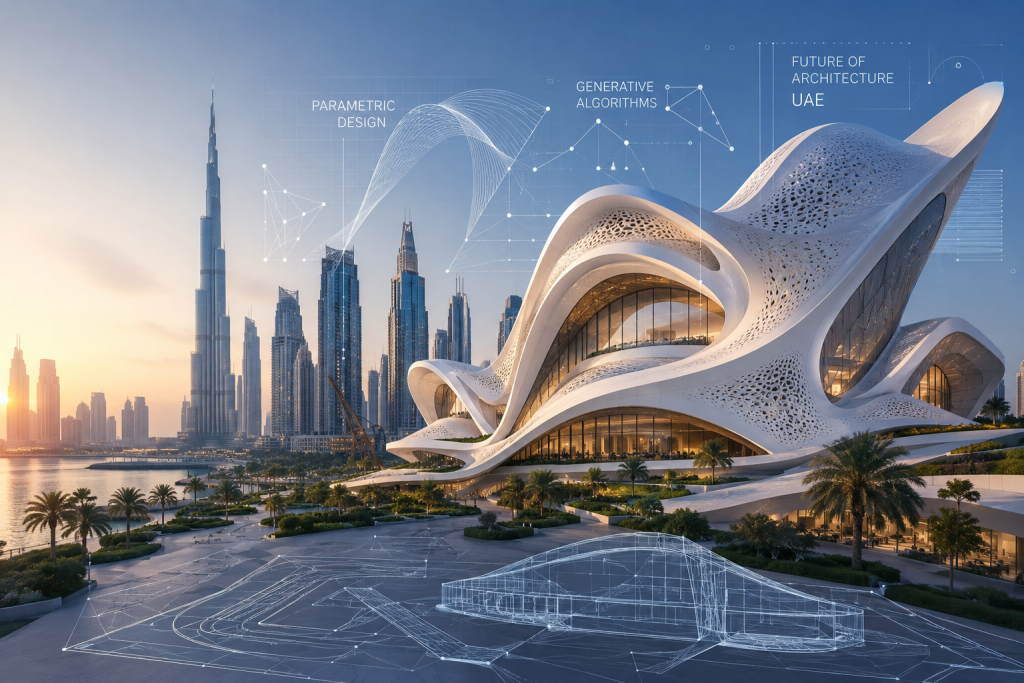
Architecture never really sits still. As new technologies come along, they keep reshaping how we imagine, plan, and actually put up buildings. And if you look back over the last ten years or so, few shifts have been as big as the arrival of parametric design. It’s an approach that lets architects and engineers shape complex forms, push performance further, and test out a whole range of design ideas, all driven by data rather than guesswork.
Here in the UAE, where bold, eye-catching architecture has become such a big part of how cities grow, the future of parametric design is steadily working its way into how buildings, public spaces, and infrastructure get planned.
What Is Parametric Design in Architecture?
To get a sense of where the future of parametric design is headed, it helps to first understand what it actually is, and how it parts ways with the more traditional way architects have always worked.
At its core, parametric design is a way of working that leans on algorithms, data, and a set of defined parameters to create and reshape architectural forms. Rather than drawing out every single element by hand, designers set up rules and relationships, so when one variable shifts, the design updates itself automatically.
This way of working has become central to modern Parametric design architecture, letting designers sift through hundreds of possibilities in a fraction of the time the old methods would have taken.
How Does Parametric Design Differ From Traditional Design Methods?
Traditional design tends to move in a straight line, where tweaking one part of a project means going back and reworking a lot of the rest by hand. Parametric workflows work in a completely different way. As soon as a designer changes a parameter, say something like:
- Building height
- Structural spacing
- Façade geometry
- Solar exposure
- Floor area requirements
the whole model can redraw itself on the spot, all while holding on to the relationships that were set up earlier. That kind of flexibility is exactly why Parametric modeling shines on projects with tricky geometry, demanding performance goals, or a need to iterate quickly. Traditional design is about arriving at a single solution. Parametric design, on the other hand, is about building a system that can spin out many solutions at once.
What Technologies Power Parametric Design?
A handful of technologies sit behind today’s Computational design architecture workflows.
These include:
- Algorithmic design platforms such as Grasshopper and Dynamo
- 3D modeling software
- Environmental simulation tools
- Structural analysis software
- Optimization engines
- Artificial intelligence-assisted design systems
Put together, these tools make up the backbone of modern Architectural design technology, letting architects test how a building will perform even as they’re still shaping the concept.
Why Is Parametric Design Becoming More Popular in the UAE?
Why does the future of parametric design matter so much in the UAE? A lot of it comes down to the country’s architectural ambitions, its sustainability goals, and a real willingness to spend on innovation.
The UAE didn’t land its reputation for cutting-edge architecture and engineering by chance.didn’t land its reputation
Cities like Dubai and Abu Dhabi have built a reputation for bold projects that push past the usual design conventions.
A few things in particular are speeding up the growth of Parametric architecture UAE projects:
Architectural Innovation
The UAE keeps pouring investment into landmark developments that call for one-of-a-kind architectural solutions. Parametric tools let designers shape complex forms that would be a real struggle to pull off using conventional methods.
Smart City Development
As part of wider digital transformation efforts, a lot of projects now build in Smart building design principles that rely on data-driven planning and optimization.
Sustainability Requirements
With more and more attention going toward Sustainable building design UAE initiatives, there’s growing demand for tools that can crunch energy performance, daylighting, and environmental conditions right from the early design stages.
Construction Efficiency
On top of that, parametric workflows tighten up coordination across the architecture, engineering, and construction teams, so there are fewer errors and projects tend to run more smoothly.
Add all of that up, and the UAE is fast becoming one of the leading markets for advanced digital design.
How Does Parametric Design Improve Building Performance?
What makes the future of parametric design so compelling? For one, it can sharpen how a building performs long before anyone breaks ground.
Instead of leaning purely on gut feel and past experience, designers can use parametric systems to test performance metrics while the design is still taking shape.
Examples include:
Environmental Performance
Parametric models can analyze:
- Solar exposure
- Shading effectiveness
- Natural ventilation opportunities
- Daylight distribution
The payoff is buildings that end up more efficient and more comfortable to be in.
Structural Optimization
Engineers can run through a range of structural configurations and land on options that use less material without giving up the performance they need.
Energy Efficiency
Design teams can fine-tune building orientation, façade performance, and mechanical systems to bring down how much energy a building uses day to day.
Occupant Experience
Parametric tools also make a difference when it comes to spatial planning, how people move through a space, and overall comfort in larger, more complex developments.
All of these capabilities feed into the bigger goals of Advanced architectural design and how well a building holds up over the long run.
What Are the Main Benefits of Parametric Design for Architects and Engineers?
The future of parametric design is catching on for some very practical reasons, ones that boost creativity and technical performance at the same time.
Faster Design Exploration
Design teams can weigh up several options fast, without having to rebuild their models from the ground up each time.
Improved Design Accuracy
Because parametric systems keep the relationships between design elements intact, there are fewer inconsistencies and coordination slip-ups along the way.
Better Collaboration
By pulling everyone into a more connected design environment, parametric workflows make it easier for architects, engineers, and specialists to stay on the same page.
Enhanced Sustainability
Since environmental performance can be checked early on, projects have a much better shot at hitting their sustainability targets.
Greater Innovation
Parametric design invites experimentation, opening the door to forms that would be tough, if not impossible, to achieve with traditional methods.
It’s benefits like these that keep driving adoption across Modern architecture UAE developments.
How Does Parametric Design Work Alongside BIM?
As digital project delivery keeps evolving, the link between BIM and the future of parametric design is becoming harder to ignore.
What Is the Relationship Between BIM and Parametric Design?
BIM and parametric design may serve different purposes, but they actually work really well together.
Parametric design is all about generating and refining design solutions.
Building Information Modeling, meanwhile, is about handling project information, coordination, documentation, and data across the building’s whole lifecycle.
Put them side by side, and you get a noticeably smoother project workflow.
When BIM and parametric design are tied together, teams can move from early concept work all the way through to detailed delivery without the usual friction.
How Can Parametric Models Improve BIM Workflows?
Parametric models give BIM workflows a lift in a few key ways:
- Generating optimized design solutions
- Automating repetitive modeling tasks
- Improving coordination between disciplines
- Reducing design conflicts
- Supporting data-driven decision making
Bringing the two together helps project teams raise both the quality of the design and the efficiency of the work.
Which UAE Architectural Projects Reflect Parametric Design Principles?
You can already spot the growing influence of the parametric design Plenty of recent projects show off traits that tend to go hand in hand with parametric methods, such as:
- Complex façade systems
- Organic architectural forms
- Performance-driven building envelopes
- Advanced shading structures
- Large-scale transportation hubs
- Cultural and civic landmarks
Projects like these show how Digital architecture UAE keeps leaning toward design approaches that are more adaptive and more focused on performance.
Not every project goes fully parametric, of course, but the ideas behind algorithmic optimization and computational design are popping up more and more across the region.
What Does the Future Hold for Parametric Design in UAE Architecture?
Where the future of parametric design goes next seems tightly bound up with the bigger trends around digital transformation, sustainability, and smart city development.
A handful of developments look set to shape the next phase of adoption:
Greater Integration With Artificial Intelligence
AI-assisted design tools will probably take over chunks of the design process and start producing ever more sophisticated alternatives.
Expansion of Generative Design
As computing power and optimization tech keep advancing, Generative design architecture workflows are likely to become far more common.
Smart City Applications
Tomorrow’s urban developments will lean more and more on data-driven systems that tie architecture, infrastructure, and environmental performance together.
Increased Sustainability Focus
Parametric tools will take on a bigger role in helping projects hit their environmental targets, thanks to more advanced simulation and optimization.
Wider Industry Adoption
And as the software gets easier to access and more people build up the know-how, parametric methods should spread beyond the headline landmark projects into everyday, mainstream development.
This shift will keep shaping the wider Future of architecture UAE, especially as cities chase smarter, more efficient, and more sustainable urban environments.
FAQs
What Is an Example of Parametric Design in Architecture?
A classic example is a building façade that reshapes its own geometry depending on how much sun it gets. With a parametric model, designers can dial in the shading, energy efficiency, and overall look all at once.
Is Parametric Design Only for Large Projects?
Not at all. Parametric design tends to get linked with big, iconic developments, but it works just as well on smaller projects whenever optimization, performance analysis, or design flexibility actually adds something.
Conclusion
The future of parametric design is reshaping how architecture comes together, letting designers leave behind old-school drafting in favor of processes that are smarter and far more adaptable.
For architects, engineers, and developers with an eye on what’s coming, parametric design has stopped being a niche idea. It’s quickly turning into a fundamental piece of how modern buildings get designed and built.